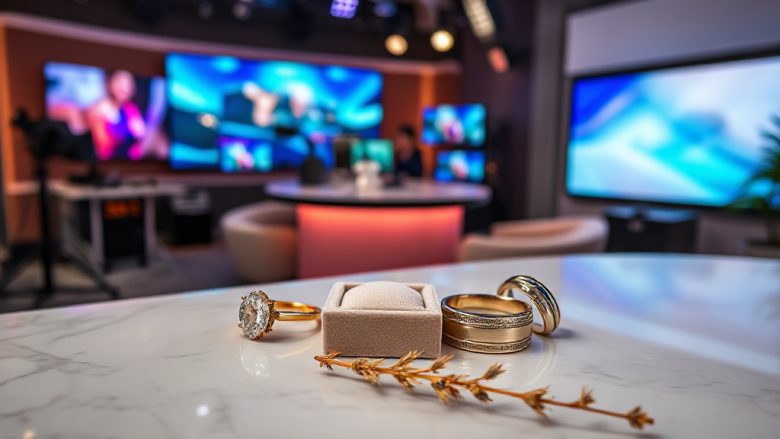
Engagement ring design doesn’t lurch from one season to the next the way fashion does. A silhouette that appears in one year’s collections often takes another three or four to reach the high street, and a decade to feel genuinely widespread. Even so, the engagement rings trends to watch in 2026 are unusually easy to spot, because most of them have been quietly building for years and have now reached the point where a couple walking into a jeweller’s will notice them immediately. This year’s mood is a tug-of-war between nostalgia — heirloom stones, warm yellow gold, hand-drawn detail — and a harder-edged practicality, from recycled metal to stones that arrive with a documented journey. Below are the five shifts worth understanding before you start looking, plus some guidance on telling a genuine direction from a passing fad.
East-West Settings Move From Niche to Mainstream
An east-west setting turns the centre stone ninety degrees, so an elongated shape such as an oval, marquise or emerald cut runs across the finger rather than up and down it. The look reads as wider, lower and slightly more modern than a traditional north-south orientation, and it sits closer to the hand, which makes it comfortable for people who work with their hands or simply dislike a tall ring catching on everything.
The reason this has moved from a specialist choice to a genuine trend is partly practical and partly aesthetic. A horizontally set oval of the same carat weight covers more of the finger width than a vertical one, so it looks substantial without demanding a bigger budget. It also plays well with the low-profile, bezel-set styles that have been gaining ground, since a bezel hides the setting prongs and lets the stone itself do the talking. The trade-off is that east-west rings can be harder to resize and can look unbalanced on very long or very short fingers, so it’s worth trying a few widths before committing.
Coloured Gemstones Take the Centre Stage
Sapphires, emeralds, rubies and increasingly spinels and tourmalines are no longer reserved for the couple who wants something deliberately unusual. In 2026 they’re a mainstream centre-stone option, and the shift is being driven by two things: price and personality. A well-chosen coloured stone of a given size is often a fraction of the cost of a comparable diamond, which frees up budget for a better setting or a more interesting cut. And a colour says something a clear stone can’t — a birthstone, a shared holiday, a favourite shade — without needing to be explained.
What’s changed recently is the palette. Deep blues and greens have been joined by softer, dustier tones: pale peach sapphires, grey-blue spinels, mossy green tourmalines. These suit the warm metal tones that are also in fashion and tend to flatter a wider range of skin tones than a single classic hue. If you go this route, ask about hardness and wear. Sapphire and ruby are tough enough for daily wear; emerald is softer and more prone to chipping, so it benefits from a protective setting and a little more care.
Recycled and Traceable Metals Become the Default Expectation
Recycled gold, recycled platinum and traceable stones used to be a premium add-on that a couple had to seek out. In 2026 they’re increasingly what buyers ask for first, and jewellers are responding by making them standard rather than special. Recycled gold is chemically identical to newly mined gold — it’s the same metal, just sourced from existing jewellery, industrial scrap and electronic waste rather than fresh extraction — so there’s no compromise in quality or colour.
The practical reason behind the shift is that traceability has become easier to prove. Refiners now issue documentation for recycled metal, and stone suppliers can often provide a paper trail from mine or cutter to counter. For a couple planning a wedding, that paperwork matters less as a moral statement and more as a form of reassurance: you know what you’re buying and where it came from. Expect to see more jewellers displaying this information openly rather than keeping it behind the counter, and expect the price gap between recycled and conventional metal to keep narrowing.
Warm Gold Tones Overtake Cool White Metals
Yellow gold has been creeping back for several years, and 2026 looks like the point at which it becomes the most requested metal colour for engagement rings in many markets. Rose gold, which had its own surge a while back, has settled into a steady niche rather than fading, and the softer, pinker alloys now sit alongside richer, more saturated yellows.
There’s a cultural reason for the warmth. Bridal jewellery has been leaning into vintage references — Art Deco geometry, Victorian engraving, mid-century cocktail shapes — and those periods were largely worked in yellow and rose gold. A warm metal also tends to look less stark against skin and photographs more forgivingly in the natural-light, film-inspired wedding photography that’s currently popular. The one caveat is that yellow gold shows scratches a little more readily than platinum, though it’s also easier for a jeweller to polish back to a fresh finish.
Hand-Finished Detail and Heirloom Reuse
The most interesting shift of the year isn’t a shape or a stone — it’s a move away from the perfectly uniform, machine-polished look. Buyers are asking for hand-engraved bands, milgrain edging, softly textured finishes and asymmetric details that make a ring feel made rather than manufactured. At the same time, more couples are bringing existing stones into new settings, resetting a grandmother’s diamond or a family sapphire into a design that suits a modern hand.
This is partly a reaction against how easy it has become to buy a competent but anonymous ring online, and partly a practical response to cost. Reusing a stone removes the single largest line item from the budget, and it carries a story that no new purchase can replicate. The downside is that older stones may need re-polishing or re-cutting, which changes them slightly, and some settings simply can’t be adapted. A jeweller who specialises in restoration, rather than one who only sells new pieces, is usually the better partner for this kind of project.
How to Choose What Actually Suits You
Trends are useful as a starting point, not a finish line. The rings that age well are almost always the ones chosen for how they feel on the hand and how they fit the life of the person wearing them, rather than for how current they look in a photograph. A few things are worth doing before you commit.
Start by thinking about daily wear. If the ring will be worn through hospital shifts, gym sessions or long hours at a keyboard, a lower setting, a bezel or a slightly wider band will save a lot of frustration. If it’s more of an occasion piece, you have far more freedom with height and delicacy. Next, decide your priorities in order — stone first, metal first, or setting first — because that order will guide every subsequent decision and stop you drifting toward whatever the last shop showed you.
Try on more than you think you need to, in different lighting, and take photographs in daylight rather than under shop spotlights. Look at how a stone behaves on your hand at arm’s length, not just under a loupe. And ask directly about aftercare: resizing, re-polishing, stone tightening and insurance valuation. A ring is a long-term object, and the support behind it matters as much as the design.
Finally, remember that the strongest trends of any year are the ones that solve a real problem — comfort, cost, durability, meaning. If a design does one of those things well for you, it will still look right in ten years. If it only looks right now, it probably isn’t the one.
Frequently Asked Questions
Are coloured gemstone engagement rings a passing trend?
No. They’ve been growing steadily for well over a decade and are now a well-established alternative to diamond centre stones. The current shift is in the palette rather than the concept, with softer, dustier tones joining the classic deep blues and greens.
Is recycled gold as good as newly mined gold?
Yes. Recycled gold is the same element, refined to the same purity, so it wears and ages identically. The only meaningful difference is where it came from, and many refiners now provide documentation to confirm the source.
Will an east-west setting suit any stone shape?
It works best with elongated cuts — oval, marquise, emerald, pear and elongated cushions. Round stones can be set east-west too, but the effect is subtle and often looks accidental rather than intentional.
How much should I expect to spend on a hand-finished or custom ring?
Custom work usually adds a design and labour premium over an equivalent ready-made piece, though resetting an existing stone can offset much of that. Get a written quote covering the setting, the metal and any restoration before you agree.