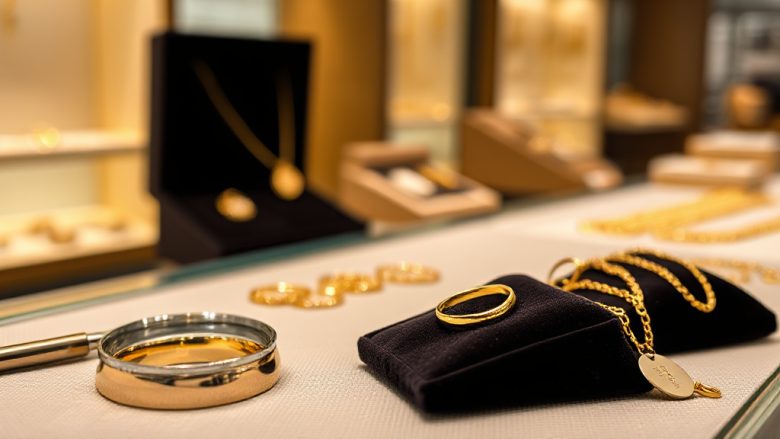
You are standing at the counter. The lights are warm, the trays are velvet, and every piece looks almost identical under that glow. A tiny tag on one chain says 14k. The next one says 18k. A third says gold-filled, which sounds reassuring but means nothing to you yet. The assistant asks what you are looking for, and you realise you do not have the vocabulary to answer properly.
That moment is completely normal. Most people buy their first serious piece of gold jewelry without any real understanding of what the numbers mean or why two yellow necklaces cost wildly different amounts. The good news is that you do not need a gemologist’s education. These gold jewelry tips for beginners come down to three questions, and once you can answer them, you will walk into any shop or browse any listing with confidence.
What does the karat number mean?
Karat is simply a measure of purity, expressed in parts out of twenty-four. Pure gold is 24k, and it is far too soft for everyday jewelry. It bends, scratches, and loses shape quickly. So jewelers mix it with other metals, usually copper, silver, zinc, or palladium, to make it durable enough to wear. The karat number tells you how much of the piece is actual gold.
18k is 75 percent gold and 25 percent alloy. It has a rich, deep color and holds up reasonably well, which is why fine jewelry often uses it. 14k is 58.3 percent gold and 41.7 percent alloy. It is noticeably harder, more resistant to scratches, and considerably cheaper. 10k sits at 41.7 percent gold and is the minimum that can legally be called gold in many countries, including the UK. It is tough and affordable but looks paler, almost brassy in some lights.
For a first purchase, 14k is usually the sweet spot. You get a real gold content, decent color, and a piece that survives daily wear without constant anxiety. 18k suits someone who wants deeper color and treats jewelry gently. 10k works if budget is the priority and you like a slightly more muted tone.
There is also a category called gold-filled, often stamped 14k GF or similar. This is not solid gold. It is a layer of gold bonded to a base metal, and the gold layer must make up at least 5 percent of the total weight by law in the UK. It wears far better than plating and can last years, but it is not the same as solid gold and should be priced accordingly. Gold-plated, by contrast, has a microscopic layer of gold that fades within months of regular wear.
Read the hallmark. In the UK, any piece over one gram must carry a hallmark showing the assay office, the metal purity, and the maker. A stamp that only says 14k without an assay mark is a warning sign. If you are buying online, ask for a clear photo of the hallmark before committing.
One more thing beginners often miss: karat affects color as well as durability. Higher karat means more yellow. Lower karat looks paler because the alloy metals dilute the gold tone. So if you love that deep, buttery yellow, 18k will give it to you more reliably than 14k.
Takeaway: Karat tells you how much gold is actually in the piece, and 14k is the most practical starting point for everyday wear.
Which gold color is right for me?
Gold does not only come in yellow. The color depends on which metals are mixed in, and each option behaves differently against skin, wardrobe, and daily life.
Yellow gold is the classic. It is made with copper and silver alloys and has that familiar warm glow. It suits most skin tones, particularly warm undertones, and it never goes out of style. The downside is that it shows scratches slightly more than white gold because the alloy is softer at lower karats. Still, for a first piece, yellow gold is rarely a wrong choice.
White gold is yellow gold plated with rhodium, a hard, bright white metal. That plating is what gives it the silvery look people associate with platinum. The catch is that rhodium wears off over time, usually within a year or two of regular wear, and the piece will need re-plating to stay white. Some people love the cool, modern look enough to accept that maintenance. Others find it annoying. If you choose white gold, factor in the cost of occasional re-plating.
Rose gold gets its pinkish hue from a higher proportion of copper. It flatters warm and neutral skin tones beautifully and has a romantic, slightly vintage feel. Copper makes the alloy harder, so rose gold is surprisingly durable. It does not need plating, which makes it lower maintenance than white gold. The color is more subtle than yellow gold and less stark than white, which is why it has stayed popular for engagement rings and everyday chains alike.
Then there is the question of matching. Many people worry that their jewelry must all be the same color. It does not. Mixing yellow and white gold is common and looks deliberate when done with intent. A yellow gold chain with white gold studs works fine. What looks accidental is wearing three different gold tones in one small area, like a necklace, earrings, and bracelet all competing. Pick one dominant tone and let the others accent it.
Skin undertone is a useful guide but not a rule. Hold a piece of yellow gold and a piece of silver-toned metal near your face in natural light. Whichever makes your skin look brighter and more even is probably your tone. If both look good, you are lucky and can wear anything.
Consider your lifestyle too. If you never take your jewelry off, rose or yellow gold in 14k will hold up with less fuss than white gold, which will eventually lose its plating. If you work with your hands or swim often, lower karats and non-plated colors are more forgiving.
Takeaway: Choose the color that flatters your skin in daylight and suits your tolerance for maintenance, not the one that is trending.
How do I keep it looking new?
Gold is durable, but it is not indestructible. A few simple habits will keep a piece looking close to new for years, and most of them take seconds.
Put your jewelry on last. Perfume, hairspray, lotion, and sunscreen all leave a dull film on gold, and some chemicals slowly attack the alloy. Let your products dry before you put anything on. The same applies at the end of the day: take jewelry off before you shower, exercise, or clean.
Store pieces separately. Gold scratches gold, and a pile of chains in a dish will tangle and abrade each other. A soft pouch or a lined box with individual compartments solves this for very little money. If you are travelling, a small fabric roll keeps chains from knotting.
Clean it gently at home. Warm water with a drop of mild dish soap and a soft baby toothbrush is enough for most solid gold. Brush lightly around settings and links, rinse, and pat dry with a lint-free cloth. Avoid abrasive polishes, which remove a thin layer of metal each time and can wear down details over years. Ultrasonic cleaners are fine for plain gold but can loosen stones, so skip them unless you know the piece is safe.
Know what to avoid. Chlorine is hard on gold alloys, so remove rings and chains before swimming. Household cleaners with bleach or ammonia can pit the surface. Hair dye and some cosmetics can stain lower-karat gold, especially rose gold, because the copper content reacts. If a piece does discolour, a professional polish usually restores it.
Check clasps and settings periodically. A loose prong or a worn spring ring is easy to fix and expensive to replace. If you notice a chain catching on clothing or a stone feeling wobbly, take it to a jeweler before it becomes a lost piece.
Finally, accept that gold patinas. It will develop tiny surface scratches and a slightly softer sheen over time. Some people love that lived-in look. If you prefer a high polish, a jeweler can buff it back in minutes, but doing this too often thins the metal. Once a year or so is plenty for most pieces.
Takeaway: Put jewelry on last, store it apart, clean it gently, and it will look new for years.
Standing at that counter again, the tags will read differently. You will know that 14k means real gold that can take a knock, that rose gold will not need re-plating, and that the chain you are holding will stay bright if you keep it away from perfume and chlorine. Three answers, one confident purchase. That is really all a beginner needs to start buying gold well.